
Shipping news·18 Aug 2026·Tasmania · Río de la Plata
China Zorrilla leaves Tasmania on Black Marlin. Largest battery-electric ferry heads for the Río de la Plata
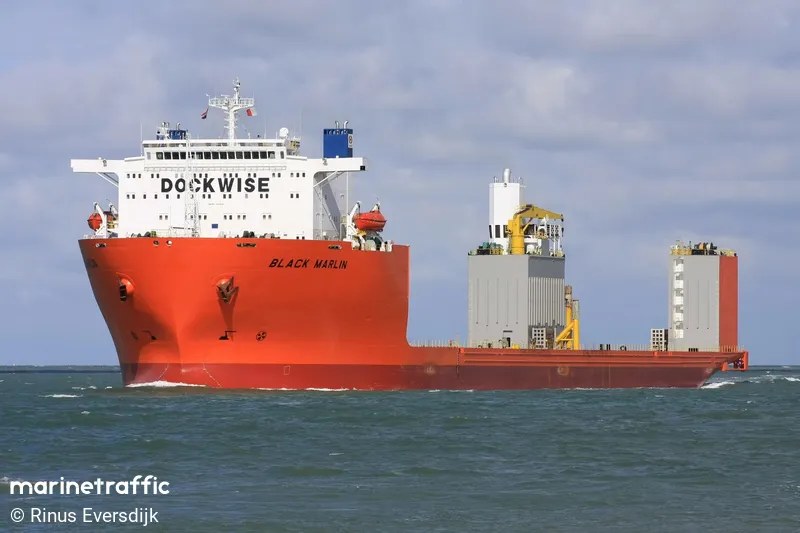
Incat’s Hull 096 — the battery-electric ferry China Zorrilla — has been loaded onto the semi-submersible heavy-lift vessel Black Marlin (IMO 9186326) in Hobart. The operation was completed at the end of July.
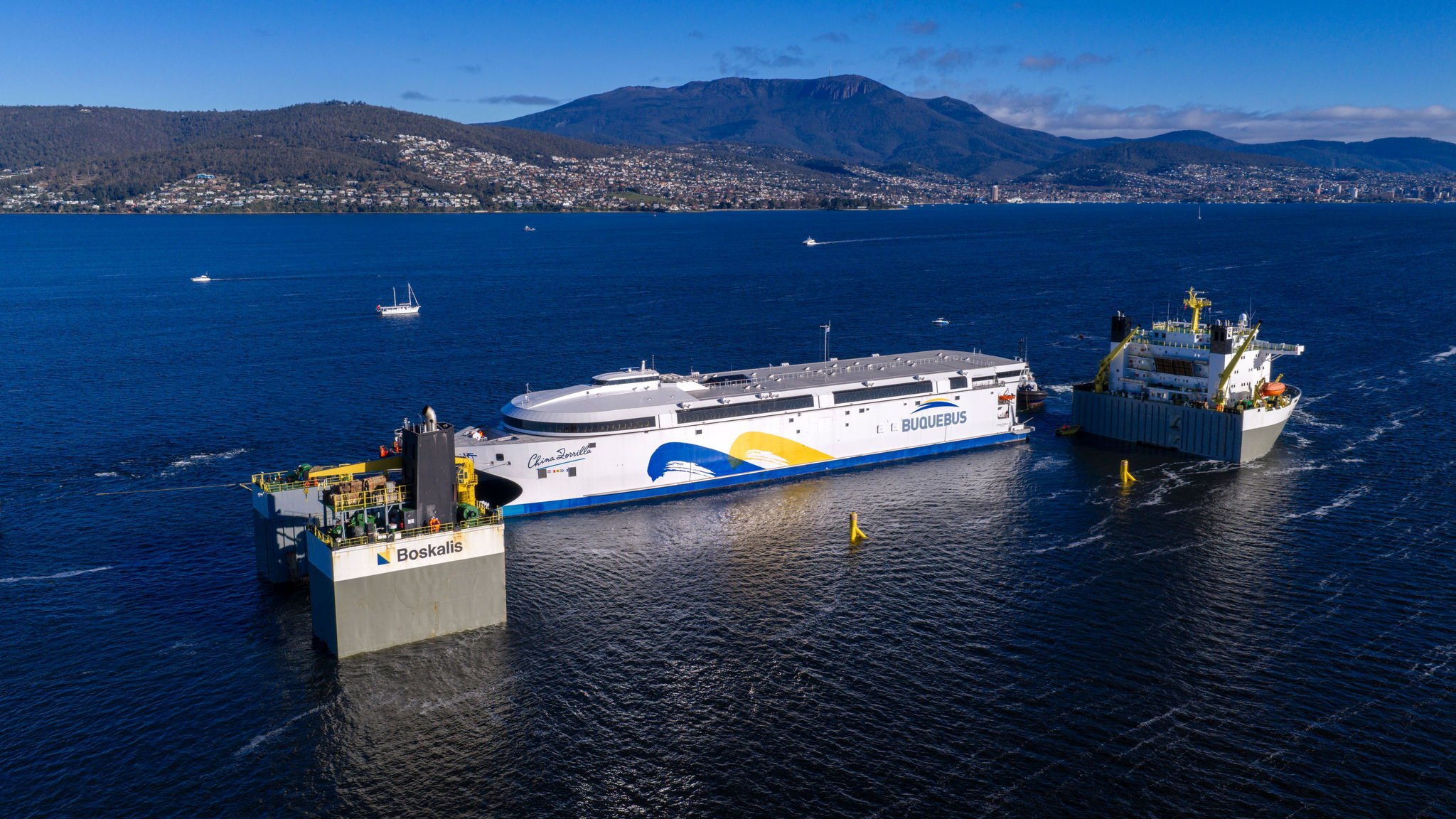
The pair are now on passage to South America. Arrival in the Río de la Plata is expected in September. Confirmed by Incat (31 July) and by Uruguayan press citing the voyage plan.
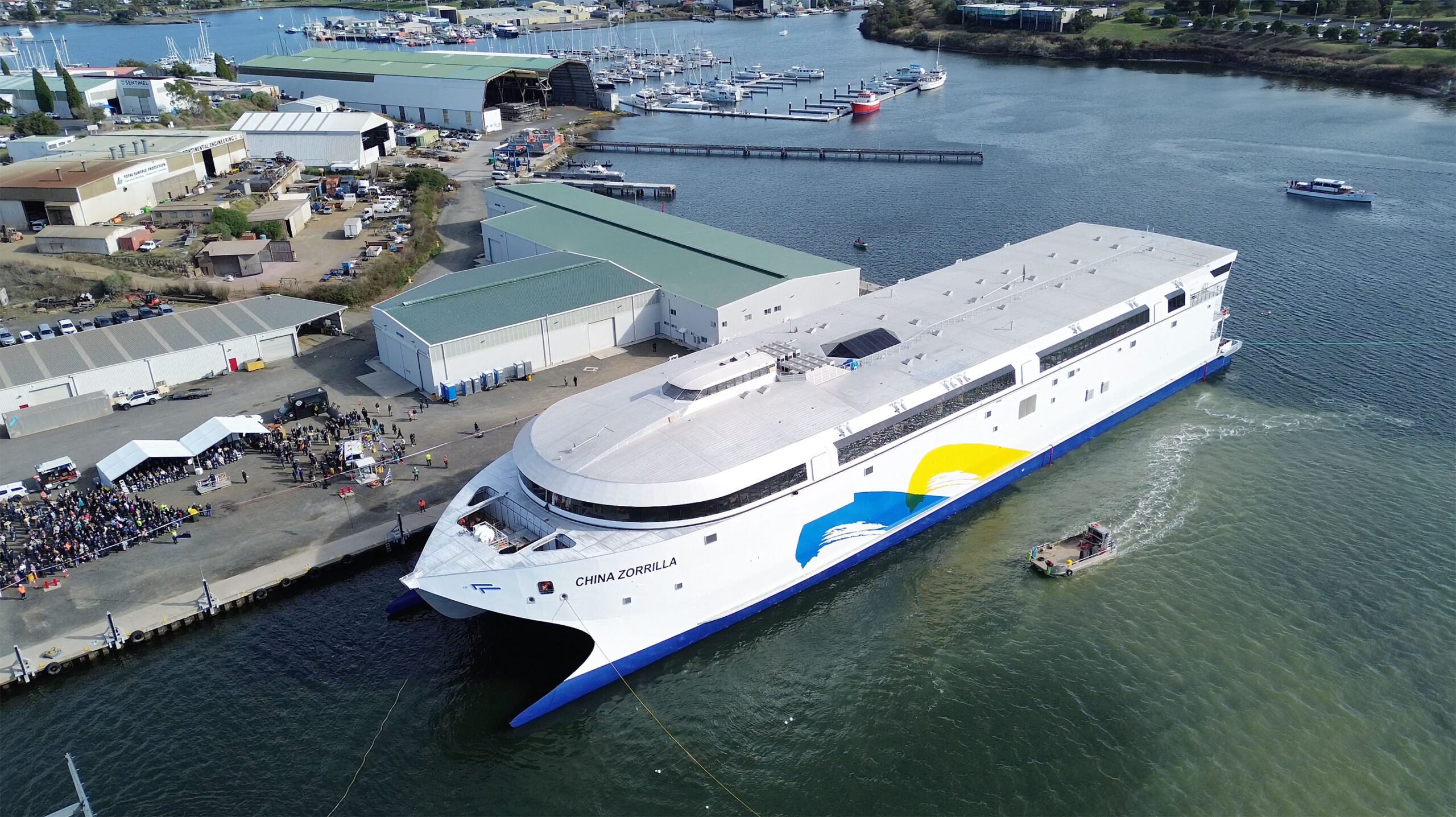
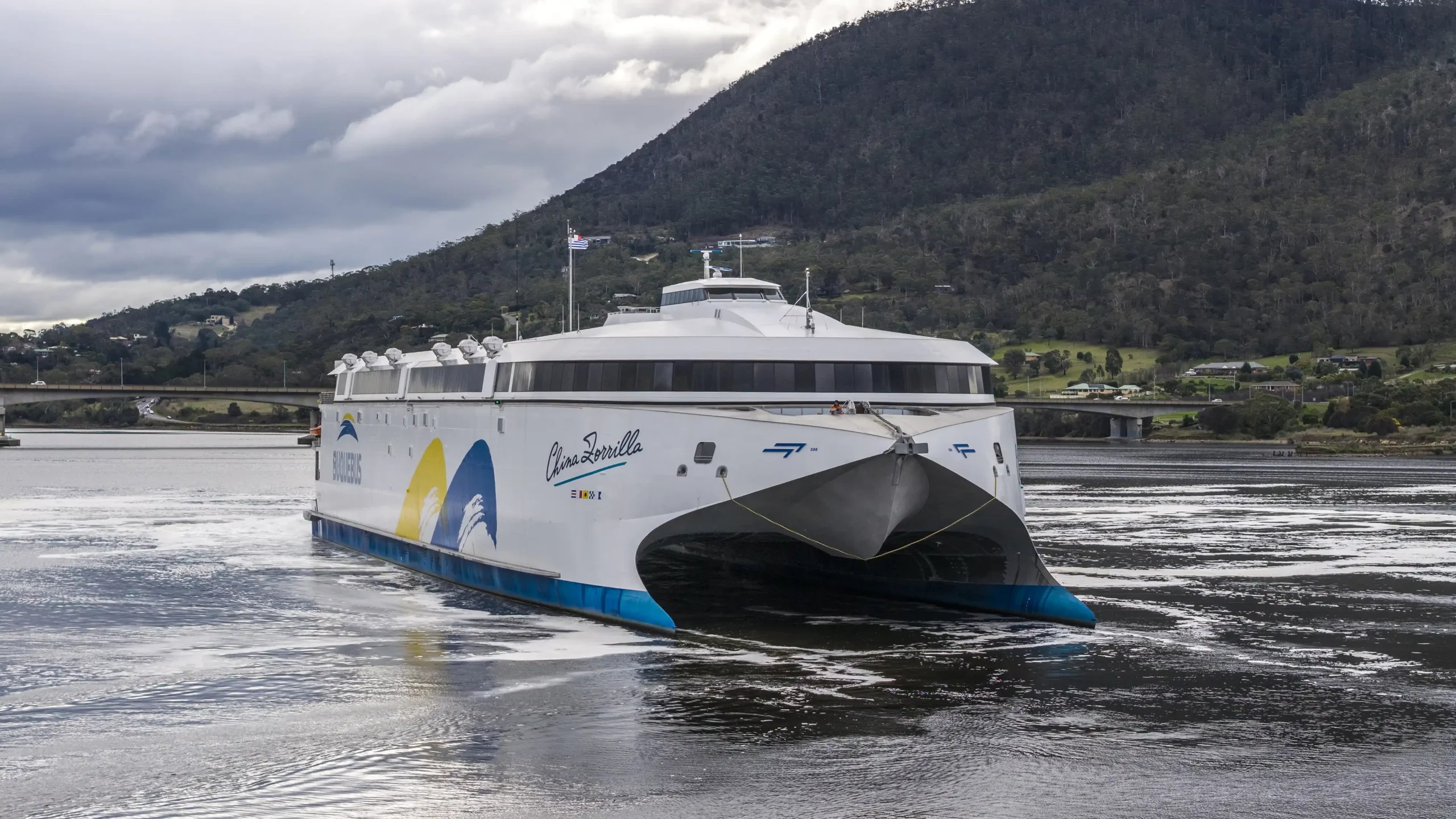
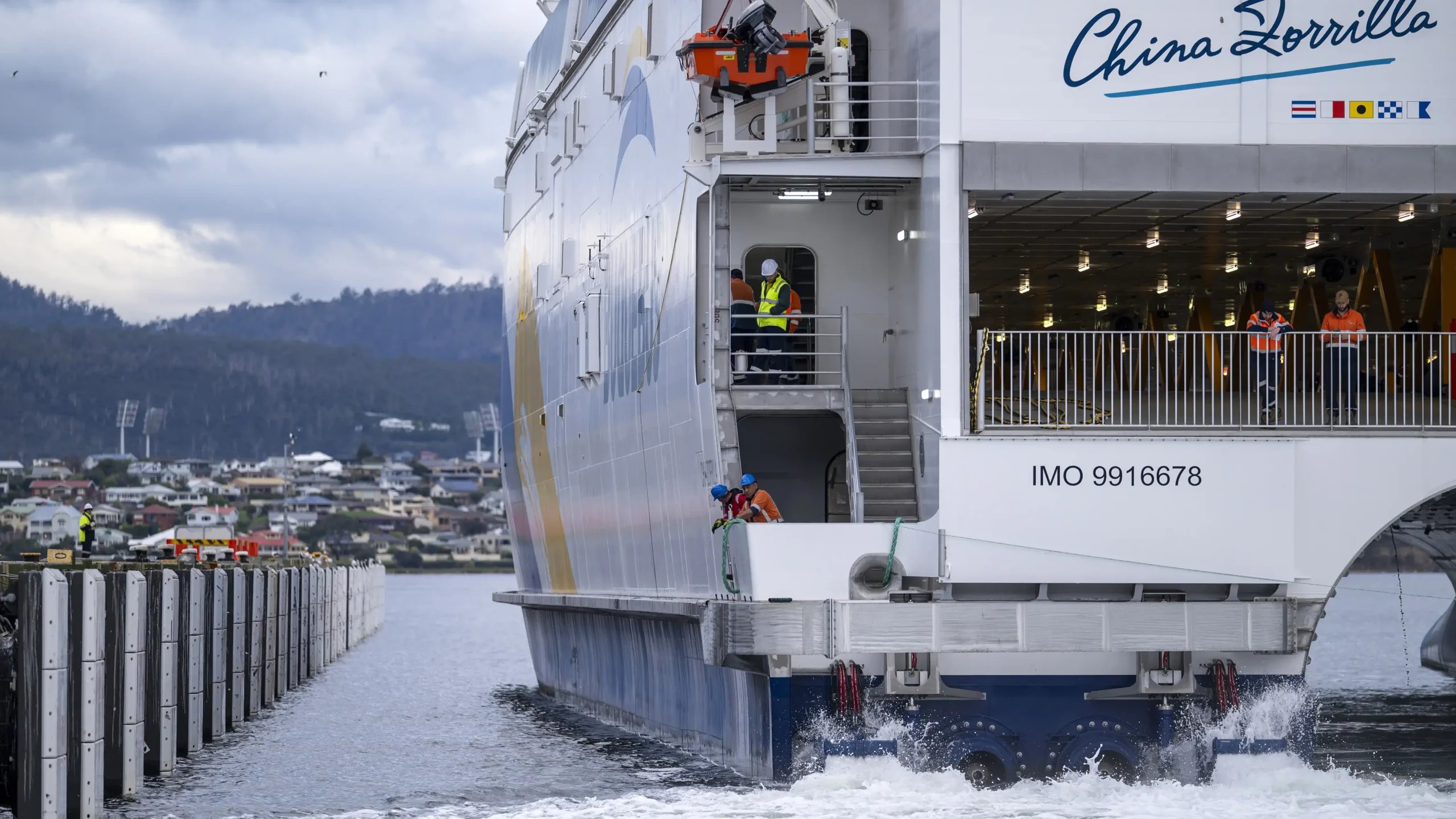
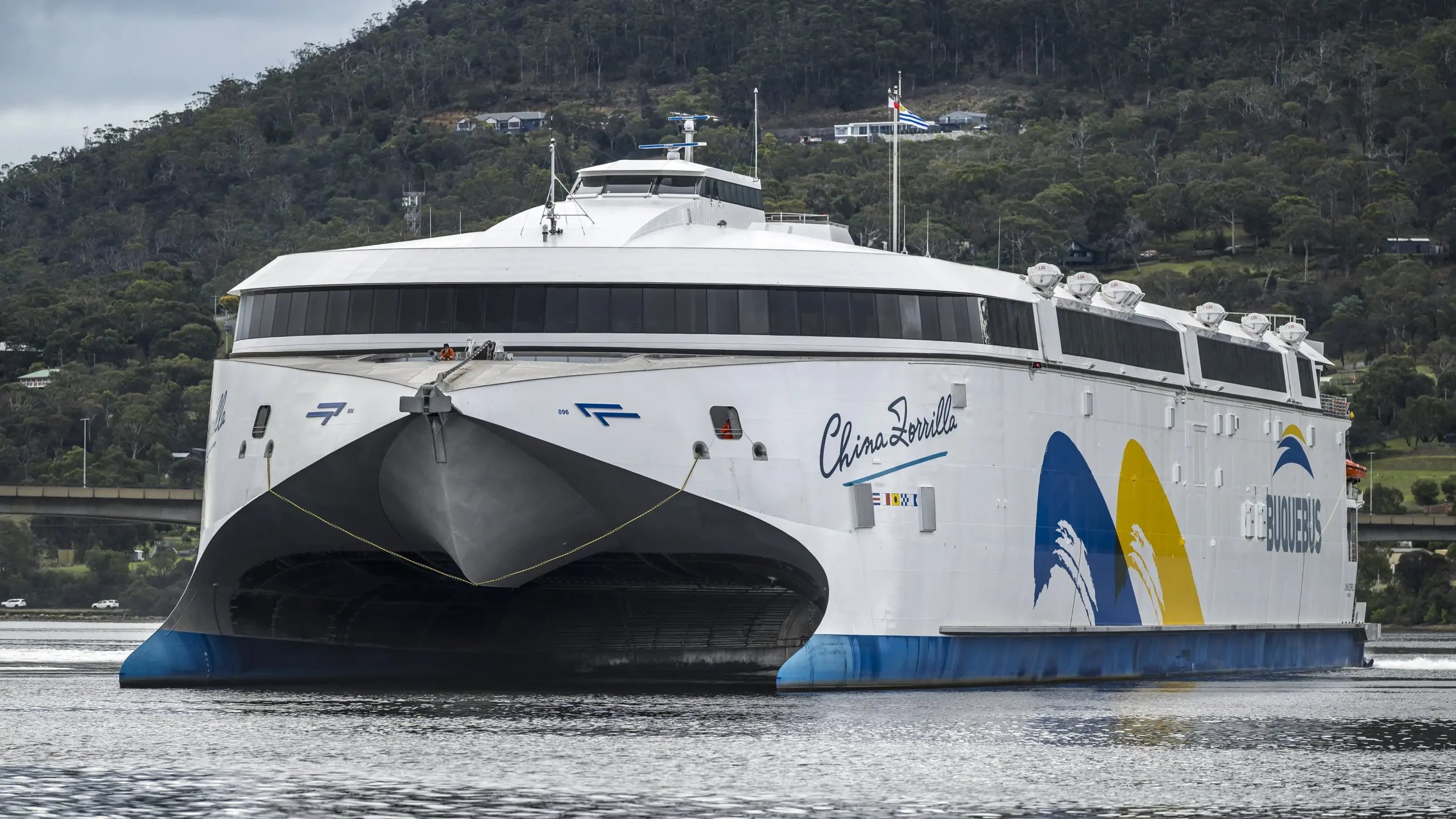
China Zorrilla is 130 m long, aluminium catamaran, built for Buquebus. Capacity is 2,100 passengers and 225 vehicles. Propulsion is entirely electric: more than 40 MWh of batteries driving eight waterjets. It is intended for the Colonia–Buenos Aires route. Port charging infrastructure has already been installed in Colonia by ANP and UTE. The vessel is not yet in commercial service. No official start date has been published.
How China Zorrilla works
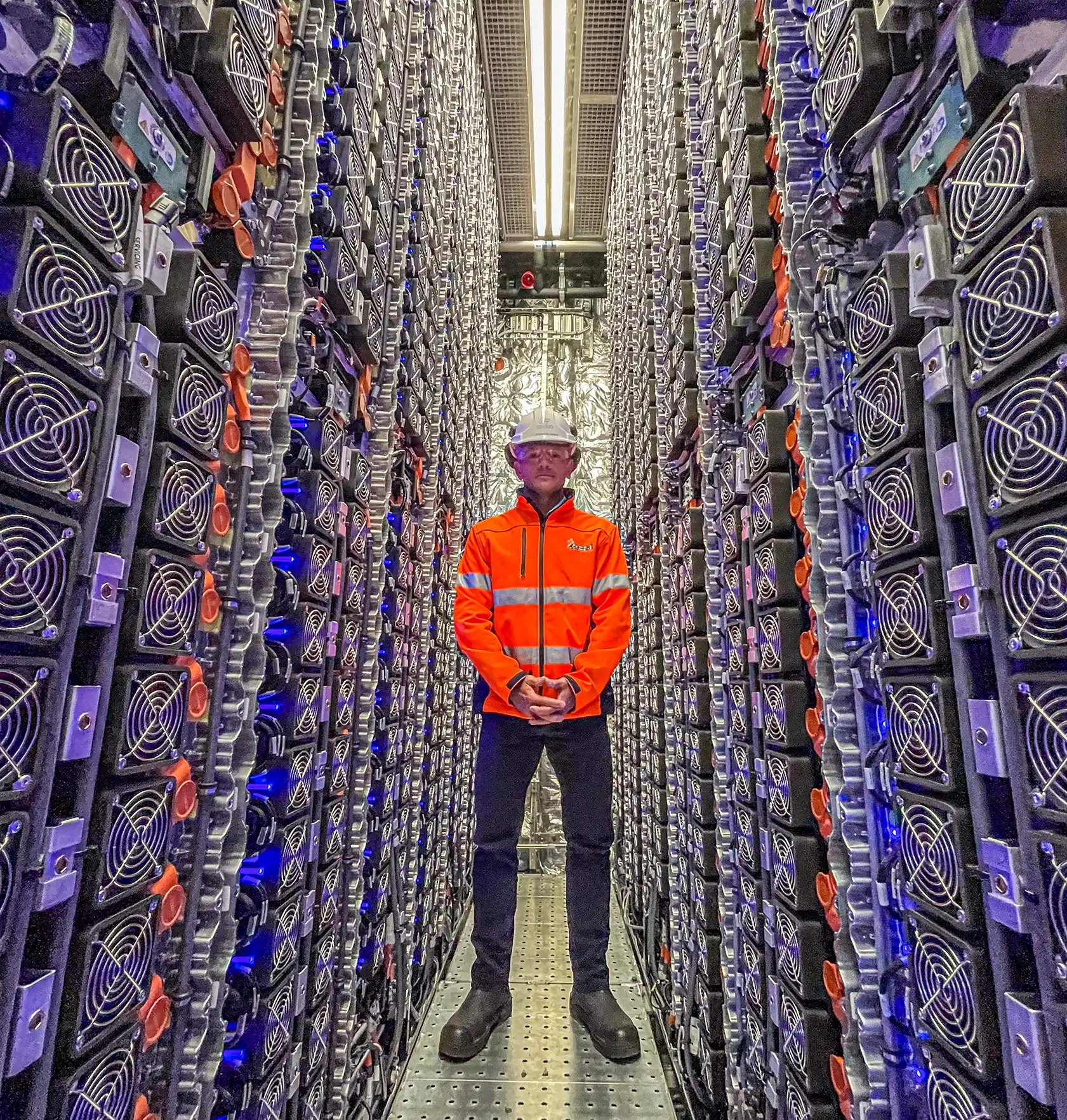
The ferry carries an Energy Storage System of more than 40 MWh. Four separate battery rooms hold 5,016 lithium-ion modules supplied by Corvus Energy and integrated by Wärtsilä. Total battery weight is approximately 250 tonnes. Eight electric motors drive Wärtsilä waterjets — two fixed and two steerable in each hull. Service speed is around 25 knots. The design range is sufficient for the Río de la Plata crossing on a single charge; shore chargers at each end restore the batteries in roughly 40–45 minutes. There is no diesel generator for propulsion. The ship is the largest battery-electric vessel yet built.
How Black Marlin works
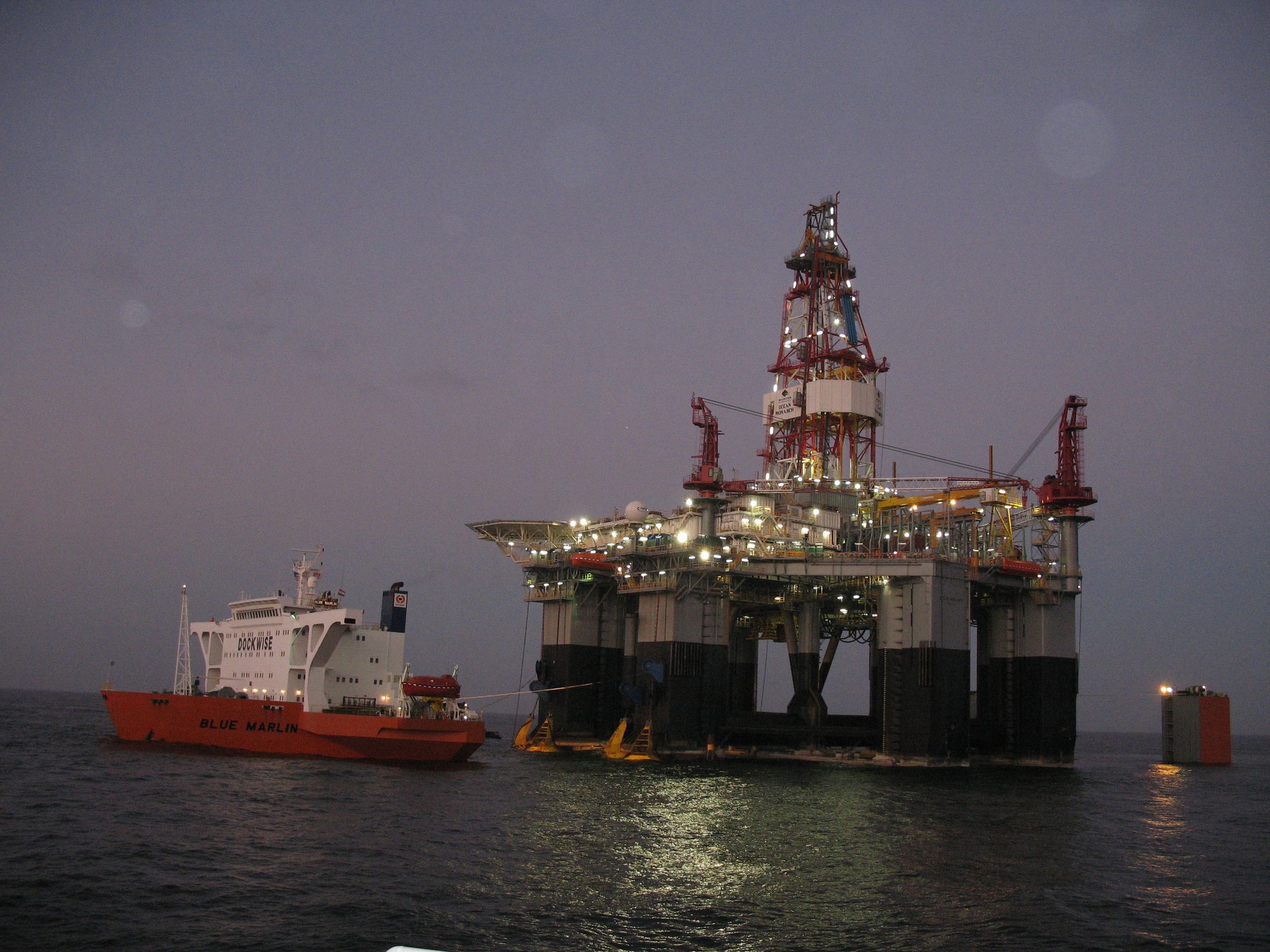
Black Marlin is a Dockwise / Boskalis semi-submersible heavy-transport vessel (IMO 9186326, 218 m, 42 m beam). She is the narrower sister of Blue Marlin. To load oversized cargo she floods ballast tanks and submerges her cargo deck until the deck is below the waterline. The cargo — here the complete 130 m ferry — is floated into position above the submerged deck. Ballast is then pumped out. The deck rises and lifts the ferry clear of the water. The cargo is secured with sea-fastenings for the ocean passage. Offloading in South America will reverse the sequence: submerge, float the ferry off, and de-ballast. The method allows transport of complete ships or platforms that cannot pass through conventional ports or canals under their own power.
Established
- Hull 096 / China Zorrilla loaded onto Black Marlin (IMO 9186326) in Hobart, July 2026 (Incat official).
- Voyage to South America underway; expected Río de la Plata arrival September (la diaria / Incat).
- Battery capacity >40 MWh, eight electric waterjets, 2,100 pax / 225 vehicles (Incat / ANP).
- Black Marlin is a semi-submersible heavy-lift ship that loads by submerging its cargo deck (Dockwise / Boskalis data).
Not established
- Exact commercial start date for the Colonia–Buenos Aires service.
- Live AIS positions of either hull during the ocean passage (current gap noted in the file).
- That the vessel has completed final commissioning or trials in South America.
Contact: desk@seavanta.com — tips, corrections, I was there.